


This paper covers the following topics:
- Section A
- Aquatic ecosystems — identifying Kenyan ecosystems (marine, freshwater), physical characteristics, estuary characteristics
- Fish anatomy — labeling parts of the Tilapia (fins, gills, etc.) and their functions
- Marine careers — matching careers to roles: aquaculturist, marine biologist, fish quality assurance officer, oceanographer, fisheries extension officer
- Aquatic environment facts — salinity, Lake Turkana, cartilaginous fish, mangroves, Nile Perch (true/false)
- Aquaculture — definition, site selection factors for earthen ponds, internal fish organs (gills and swim bladder), extensive vs. intensive aquaculture
- Section B
- Earthen pond construction — topography and soil type considerations, steps in constructing an earthen lined pond, area calculation, security measures
- Marine aquaculture — fingerling introduction process, predator management in a fish cage, importance of record keeping, liming before stocking
- Coral reef conservation — causes of coral bleaching, economic benefits of healthy reef ecosystems, conservation of seagrass and mangroves
- Fish processing — anatomy of the Nile Perch (labeled parts and functions), morphological comparison of Nile Perch and Great White Shark, average weight calculation, role of fish processing factories in the Kenyan economy
- Total Marks: 80 (Section A: 30 marks; Section B: 50 marks)
- Structure:
- Section A (30 marks) — Short-answer questions; all compulsory
- Section B (50 marks) — Structured/extended-response questions; all compulsory
- Format: Ms Word
Related products

Grade 10 Exams and Homework
2026 Grade 10 Marine and Fisheries End of Term 1 Exam with Marking Scheme
KSh50.00

Quick View
Quick View
Grade 10 Exams and Homework
2026 Grade 10 Business Studies End of Term 1 Exam with Marking Scheme
KSh50.00
Quick View

Grade 10 Exams and Homework
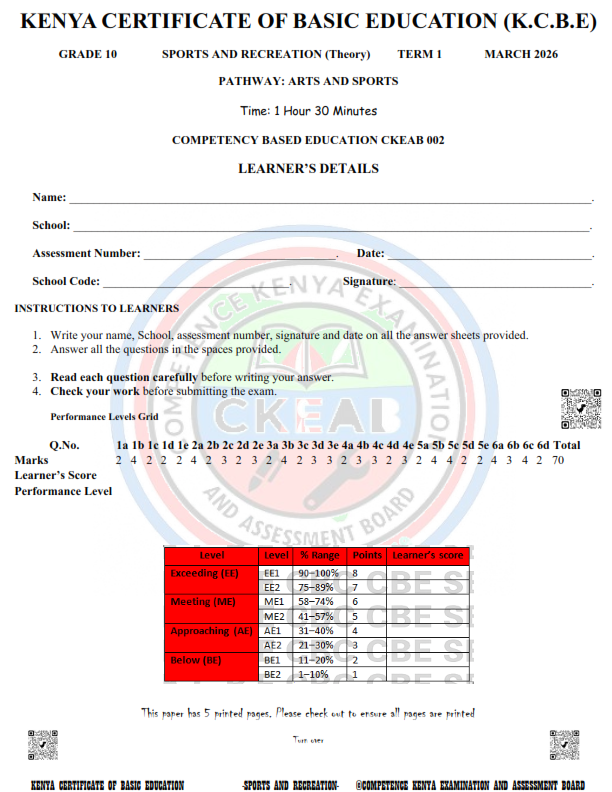
2026 GRADE 10 SPORTS AND RECREATION END TERM 1 EXAM WITH MARKING SCHEMES
KSh50.00
Quick View

Grade 10 Exams and Homework
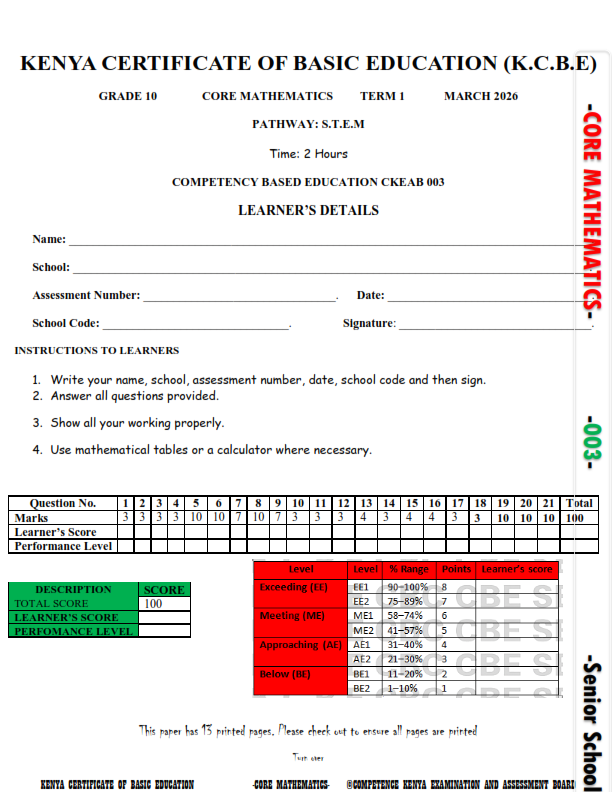
2026 GRADE 10 CORE MATHEMATICS END TERM 1 EXAM WITH MARKING SCHEMES
KSh50.00
Quick View
Quick View
Quick View
Grade 10 Exams and Homework
2026 Grade 10 English and Literature End of Term 1 Exam with Marking Scheme
KSh50.00
Quick View
